
Day one morning: Phuket Old Town
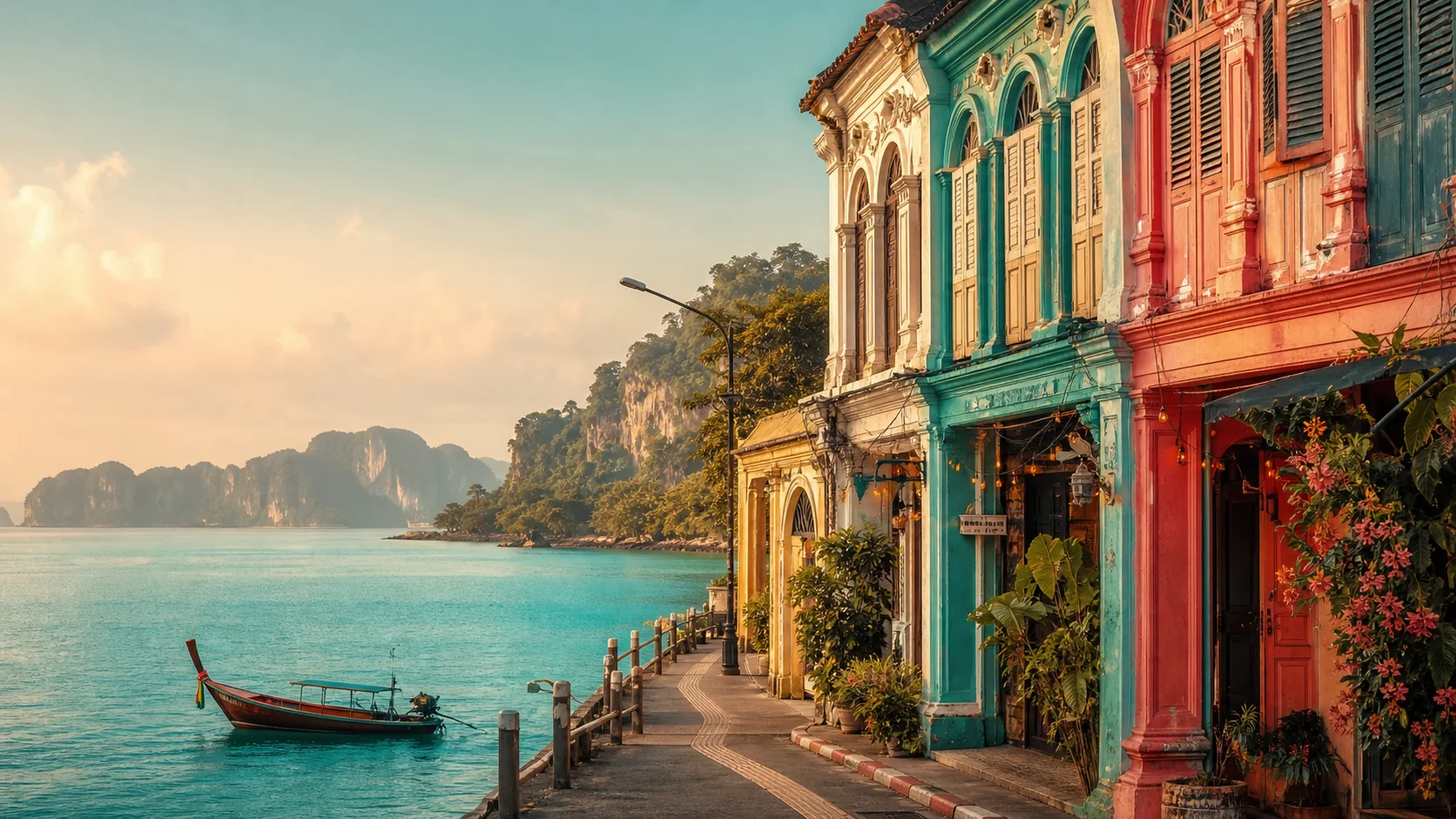
Begin in Phuket Old Town, where Sino-Portuguese streetscapes and local museums explain the island's trading history.
Walk the historic streets before the day grows busy, noticing the shophouse façades, shrines and civic buildings rather than treating the district as a backdrop. Phuket's UNESCO Creative City designation concerns gastronomy, linking the old trading port to living food traditions and cultural exchange.
Visit Phuket Thai Hua Museum for deeper context, checking its owner-listed information before arrival. Keep doorways and pavements clear when photographing buildings; many properties remain active homes or businesses rather than open exhibits. The UNESCO Creative Cities record also connects the district's food traditions to Phuket's history of migration, trade and cultural exchange.
- Start on foot and keep the route compact.
- Ask before photographing people or interiors.
- Check museum access on its official page.
Day one afternoon: food and island history
Spend the afternoon understanding Phuket through local food, markets and the communities that shaped its cuisine.
Choose dishes from established shops or a market and ask staff about ingredients if you have dietary restrictions. UNESCO describes Phuket's food culture as connected to the island's diverse communities, so approach it as heritage rather than a list of viral snacks.
Return to the Old Town lanes after lunch for details missed in the morning. Follow signs at shrines and cultural sites, dress with shoulders and knees covered where requested, and avoid scheduling a distant sunset stop that would turn the day into a long road transfer.
- Tell staff clearly about allergies.
- Carry a light respectful layer for shrines.
- Keep the evening in or near Old Town.
Day two: Wat Chalong and the southern coast
Use the second day for Wat Chalong, Karon Viewpoint and one southern beach instead of trying to stop at every bay.
At Wat Chalong, remember that the complex serves worshippers. Wear suitable clothing, speak quietly, remove shoes where indicated and follow local photography rules. The Tourism Authority of Thailand identifies it among Phuket's key cultural places.
Continue toward Karon Viewpoint, then choose Kata Noi or Nai Harn for a longer pause. Viewpoints and beaches are more satisfying with time to observe conditions; currents and weather can change, so follow flags, lifeguards and local safety instructions rather than assuming the sea is suitable.
- Cover shoulders and knees at temple sites.
- Choose one beach for a real stop.
- Obey beach flags and on-site safety advice.
Day two evening: Rawai or Promthep Cape
Finish in the south at Rawai or Promthep Cape, choosing one base and allowing for weather and road conditions.
Promthep Cape is a well-known viewpoint, while Rawai has a waterfront connected to local maritime life. Neither requires rushing between multiple sunset locations. Arrive early enough to park or be dropped safely and stay behind barriers on exposed ground.
If visibility is poor, replace the viewpoint with a relaxed meal rather than forcing a photo. Arrange the return journey before dark, especially when staying elsewhere on the island, and use a licensed transport provider recommended through your accommodation or an official visitor channel.
- Do not cross barriers for a photograph.
- Arrange the return before settling in.
- Accept poor visibility and use the evening differently.
Day three: Sirinat and the northern shore
Reserve the final day for Sirinat National Park and the northern coast, subject to current park and environmental guidance.
Sirinat protects coastal environments in northern Phuket. Consult Thailand's Department of National Parks page for current access and rules, and keep to designated areas. Do not remove shells, disturb wildlife or leave food and plastic behind.
Mai Khao can be combined with the park when local conditions and access allow, but the day should remain nature-led rather than attraction-led. Aircraft viewing near the airport must never involve restricted land or unsafe positioning; obey every barrier and authority instruction. Leave ample time for an airport transfer if departing.
- Check national-park notices before travelling.
- Carry out everything you bring in.
- Stay outside all airport-restricted areas.
- Keep a generous departure buffer.