Connect this guide with the rest of your visit in the Phuket trip planner. Read how the research is made and what its sources establish.
At a glance
Start here
- Begin with Thai Hua Museum so the streets have historical context.
- Use Krabi, Thalang, Dibuk, Phang Nga and nearby roads as a compact observation loop.
- Separate a building's visible exterior from an assumption that visitors may enter.
- Choose one food pause and one museum rather than racing between every landmark.
01
Start with Thai Hua Museum's questions
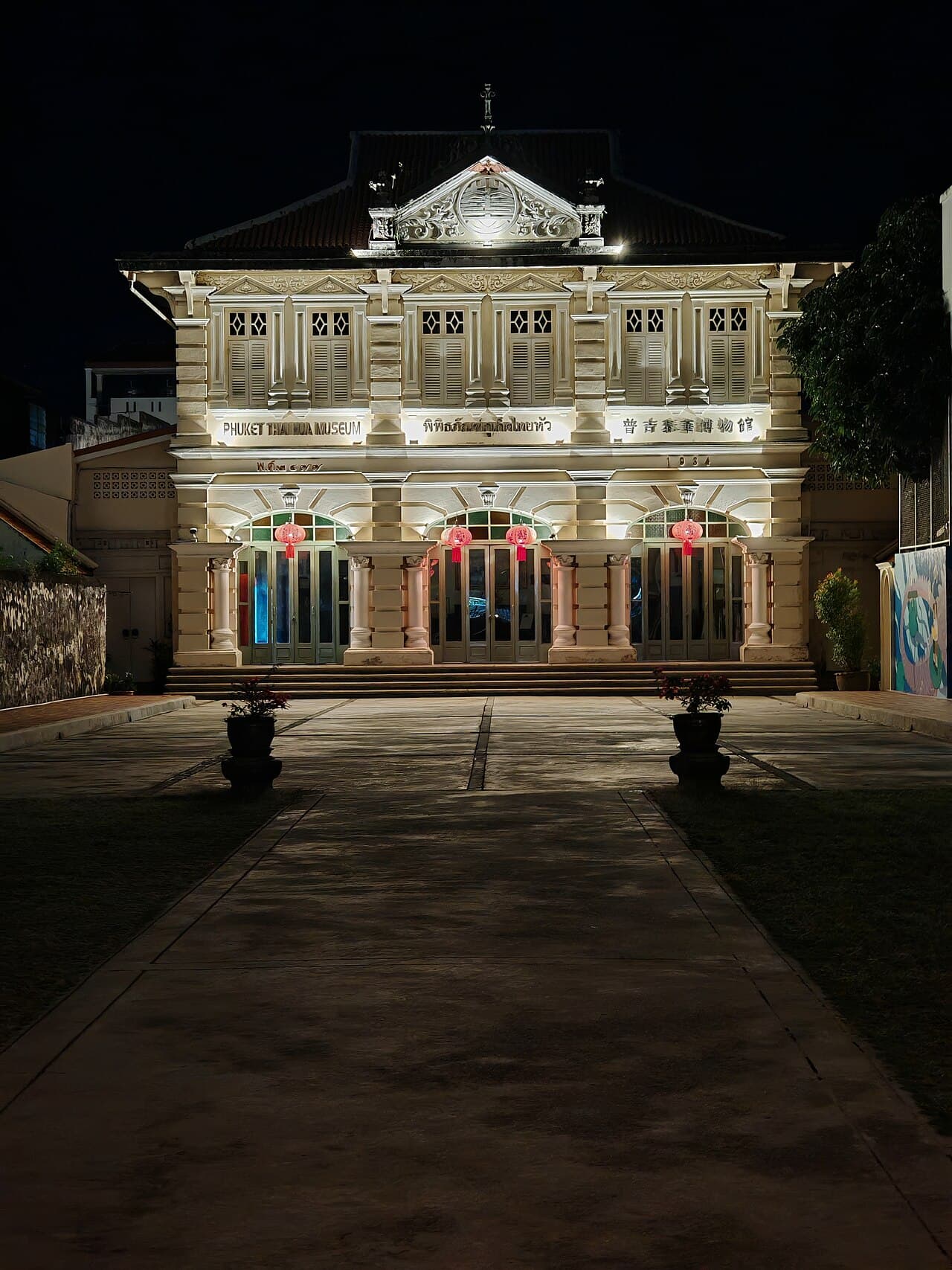
The Phuket provincial page places Phuket Thai Hua Museum on Krabi Road and explains that the building began as a Chinese school. Its displays cover people, clothing, food, festivals and the island's transition from tin mining to tourism. That breadth makes the museum a strong first stop for understanding what the streets represent.
Before entering, choose two questions: how did migration shape the town, and how did mining wealth change its buildings? Read labels for answers rather than trying to photograph every room. Opening arrangements are mutable; the provincial page points readers to the museum for more information, so confirm directly rather than reproducing its older hours claim.
- Record the names of communities and occupations mentioned in the displays.
- Notice which museum details can later be recognised outside.
- Ask staff before photographing displays or interiors.
02
Move from Krabi Road toward Thalang Road
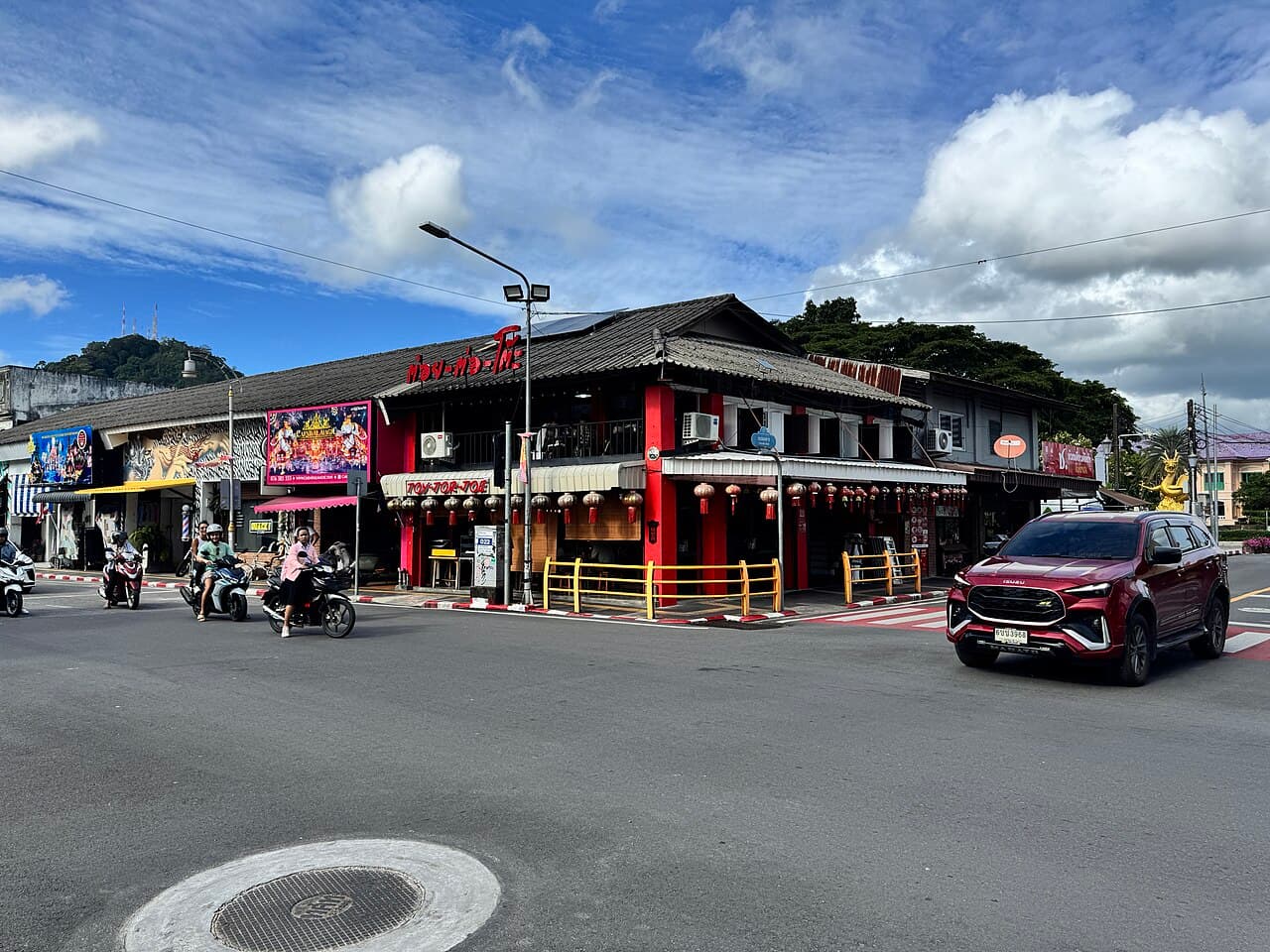
From Krabi Road, continue toward the core streets rather than jumping to a distant attraction. TAT's official day-route page names Thalang, Dibuk, Phang Nga, Yaowarat, Krabi and Soi Romanee as part of Old Town's historic fabric. The provincial tourism page adds Phuket, Rasada, Ranong, Montri, Satun and Thepkasatri roads to the wider district.
You do not need to cover them all. Build a short loop through Krabi, Thalang and one parallel street, then extend only if conditions suit the group. This sequence keeps the museum's evidence close to the buildings being observed. Save exact entrances on a map, but treat streets as living routes with deliveries, worship and daily business.
- Use crossings rather than stepping into traffic for a symmetrical photograph.
- Keep shop and residence entrances clear.
- Drop the outer streets before sacrificing the museum visit.
03
Read shophouses and mansions differently
TAT describes terraced houses shaped by mixed cultural influences and links Old Town's growth to tin-mining prosperity. A row shophouse combines a narrow street frontage with depth behind it, while a detached mansion signals a different use of land and wealth. Comparing the two is more revealing than treating every decorated facade as the same style.
Look at proportion, repeated bays, upper-floor shutters, ventilation openings, arcades, courtyard clues and decorative motifs. These observations do not require entering a property. Avoid assigning an exact date or owner from appearance alone; use an official plaque, museum label or owner-provided interpretation when a building's individual history matters.
- Compare a continuous terrace with a freestanding house.
- Look for climate responses as well as ornament.
- Leave uncertain architectural labels as questions, not facts.
04
Notice reuse rather than imagining a frozen town
Old Town is not an open-air set. TAT notes that historic buildings now hold accommodation, restaurants, coffee shops and souvenir businesses, while the provincial sources describe museums, shrines and civic functions. A good walk asks how older structures continue to carry modern uses without pretending that every conversion preserves the same amount of fabric.
Pause where one block shows several uses. Observe signs, thresholds and the relationship between upper and lower floors. If a business welcomes visitors, use it as a real meal or rest stop, not merely as a free interior backdrop. If access is unclear, stay outside. The exterior already supplies evidence about scale, frontage and street rhythm.
- Choose a pause that genuinely serves the group.
- Do not follow another visitor through an unmarked doorway.
- Treat active shrines as religious places, not decorative stops.
05
Add one food stop with historical context
TAT's historic-roads article connects Old Town's food stalls and family-run restaurants with the different communities that shaped Phuket. It mentions a-pong, Chinese-style noodles, dim sum and Phuket-style kanom jeen as examples. Use that list to recognise influences, not to declare one shop or version universally best.
Choose one stop according to appetite, dietary needs and the route ahead. Ask staff about ingredients when required and accept that recipes vary. The walk remains a heritage exercise when the meal prompts a question about migration, trade or local produce; it becomes a checklist when dishes are collected without context or respect for the people serving them.
- Communicate allergies before ordering.
- Order what you can reasonably finish.
- Do not turn a busy counter into a long photo session.
06
Close the loop with evidence, not extra distance
End by returning to one claim from the museum and finding its street-level trace: a school story, a mining reference, a food tradition, a religious building or a repeated design feature. This gives the walk a conclusion without adding another district. A note with two supported observations is more useful than dozens of unidentified facade photos.
If rain or heat shortens the route, keep Thai Hua and one compact block. If the museum is unavailable, use TAT's named streets as an exterior-only loop and postpone detailed historical claims until an official interpretation source can be consulted. Current closures, events and pedestrian arrangements should always override this editorial sequence.
- Write down which source supports each historical observation.
- Keep photographs paired with street names.
- Save unverified stories for later research.
Useful answers
Reader questions
Which museum gives the best starting context for this walk?
Phuket Thai Hua Museum is the suggested anchor because the provincial page describes displays on Chinese Phuket history, food, festivals, clothing and the shift from mining to tourism. Confirm current access directly.
Sources: Phuket Provincial Governor's OfficeWhich streets belong to Phuket Old Town?
Official sources name a wider network including Krabi, Thalang, Dibuk, Phang Nga, Yaowarat and Soi Romanee, with additional surrounding roads. A useful first walk can cover only three or four of them.
Sources: Tourism Authority of Thailand; Phuket Provincial Governor's OfficeCan visitors enter the historic shophouses?
Only when the current occupant clearly welcomes entry. Many buildings are active homes, businesses, shrines or institutions; a visible exterior is not permission to enter or photograph inside.
Sources: Tourism Authority of ThailandDoes this route depend on a weekly street market?
No. The route is designed around permanent streets and museum context. Any market schedule is mutable and should be checked with the municipality or organiser rather than assumed from an older page.
Sources: Phuket Provincial Governor's OfficeRead the evidence
Sources and further reading
These sources support the relevant sections above. Plans and comparisons are editorial suggestions. Check operators for current arrangements.
- STROLL THE HISTORIC ROADS IN PHUKET OLD TOWN ↗Tourism Authority of Thailand · Research date 14 September 2026
Old Town's connection to tin prosperity, mixed architectural influences, compact walkability, Thai Hua Museum and examples of local food traditions.
- Recommended Route for One Day ↗Tourism Authority of Thailand · Research date 14 September 2026
The named Old Town street group, multicultural settlement, terraced Sino-European buildings and adaptive reuse.
- Old Town Phuket ↗Phuket Provincial Governor's Office · Research date 14 September 2026
The wider Old Town street network and its relationship to Chinese tin-mining wealth and Sino-Portuguese buildings; mutable tour times were not used.
- Phuket Thai Hua Museum ↗Phuket Provincial Governor's Office · Research date 14 September 2026
Museum location, former-school role, architectural details and exhibition themes; the page's mutable opening claim was not reproduced.